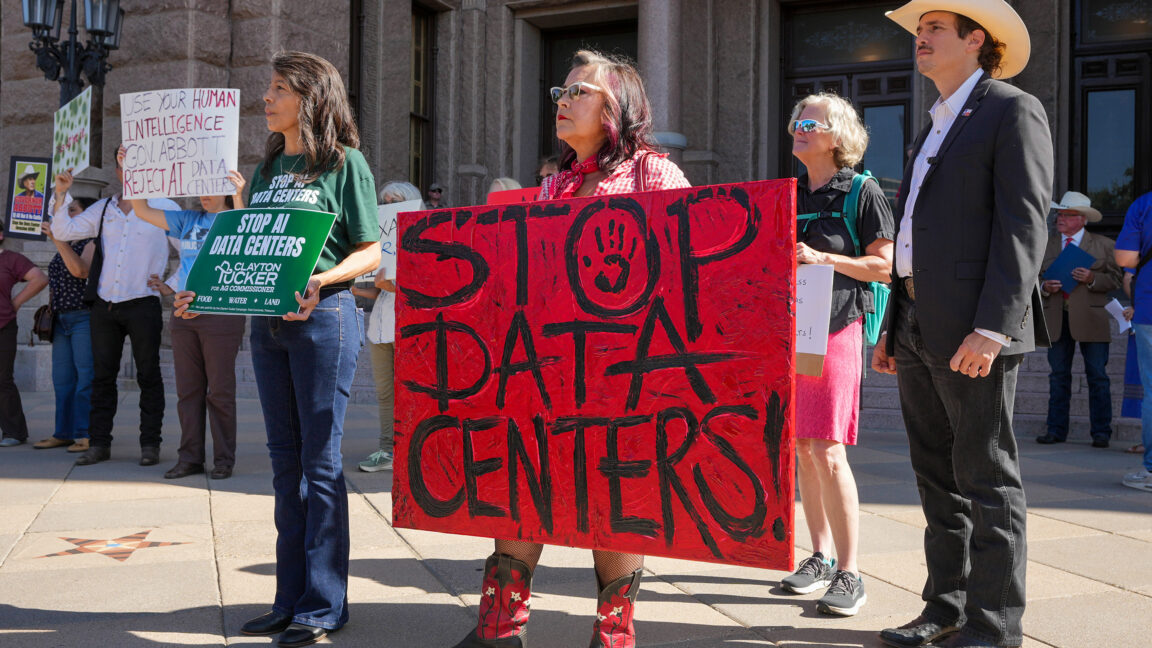
The great Texas data center land grab just hit a wall. Governor Greg Abbott, who less than a year ago branded the state the “epicenter of AI development,” has ordered a moratorium on new grid connections for data centers. The directive, issued August 3 to the Public Utility Commission and ERCOT, demands a full audit of every project in the interconnection queue before any more get the green light. The reason is a number so large it breaks the usual scale: more than 1,800 projects are waiting to plug in, representing over 474 gigawatts of requests. For context, that’s more than five times the state’s all-time peak electricity demand. About 90 percent of those requests come from data centers.
It’s a stark pivot for a state that rolled out the red carpet with cheap land, tax breaks, and a deliberately lighter regulatory touch, putting it on track to dethrone Virginia as the top US data center market. But the math got scary fast. Abbott’s office said the “unprecedented load growth could endanger the reliability and stability of the Texas electric grid.” That’s not hyperbole. ERCOT operates as an island grid largely disconnected from the rest of the country, so it can’t easily import power when things get tight. The state leads the nation in adding new generation, yet the pipeline of potential digital load is still running laps around the physical capacity to serve it.
Many of those 1,800 projects are speculative and will never break ground. But ERCOT’s own forecasts, reported by The Texas Tribune, show statewide electricity demand could double the current record by 2032, driven heavily by data center growth. The moratorium essentially forces developers to prove their projects are real and to detail exactly how they’ll impact local communities and grid stability before securing a spot in line. It’s a rare instance of a state government tapping the brakes on an industry it aggressively courted, and it signals that even the most business-friendly jurisdictions are now weighing the physical limits of the grid against the promises of the AI boom.
This move echoes a broader reckoning unfolding in markets like Northern Virginia and Dublin, where utility constraints are already forcing data center developers to look further afield. The difference in Texas is the speed of the reversal—from calling the state AI’s epicenter to hitting pause in under a year. The audit will likely thin the queue, separating projects with actual financing and timelines from those hoping to flip interconnection slots. But it also raises an open question: if Texas, with all its land and energy, is pumping the brakes, what does that mean for the rest of the country’s AI infrastructure ambitions?