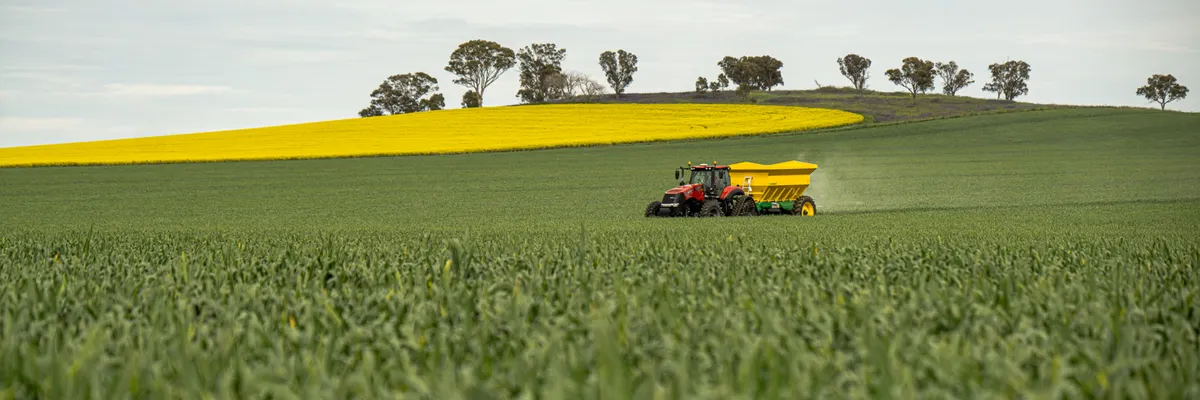
Chemical fertilizer feeds roughly half the planet, but making it burns natural gas and pumps out about 2% of global greenhouse-gas emissions. A startup called Switch Bioworks thinks the fix isn’t a new chemical process — it’s teaching microbes to do the work themselves.
The problem has always been biological economics. Nitrogen fixation is energetically brutal for microbes. If they spend their resources making ammonia, they don’t have enough left to grow and colonize the soil around a plant’s roots. That’s the wall previous microbial fertilizer companies hit. Switch’s approach sidesteps it with a genetic switch: DNA that keeps ammonia production switched off while the microbes establish themselves, then flips it on once the colony is thriving. The leading trigger is soil nitrogen level. When nitrogen drops below a certain threshold, the microbes start producing ammonia.
“We have to reinvent fertilizer,” says Tim Schnabel, the company’s founder and CEO. Switch is currently running trials across six US states, focused first on corn — over 90 million acres were planted in the US in 2026. Schnabel says a commercial product is two to three years out, and as of August, some treated corn plants already looked visibly healthier than untreated controls. The company plans to harvest in late October or early November.
Dan Blaustein-Rejto, director of food and agriculture at the Breakthrough Institute, sees real potential but urges caution. Lab results are promising, yet field trials are where products prove themselves — and independent trials matter, since company-reported data often outruns what outside researchers find. Pivot Bio, a competitor founded in 2011, already has products on millions of acres, which suggests farmers are open to biological alternatives. The question is whether Switch’s genetic-switch approach can deliver results reliable enough to justify ditching a chunk of synthetic fertilizer. If it can, agriculture gets a rare win: lower emissions, lower costs, and no yield penalty.