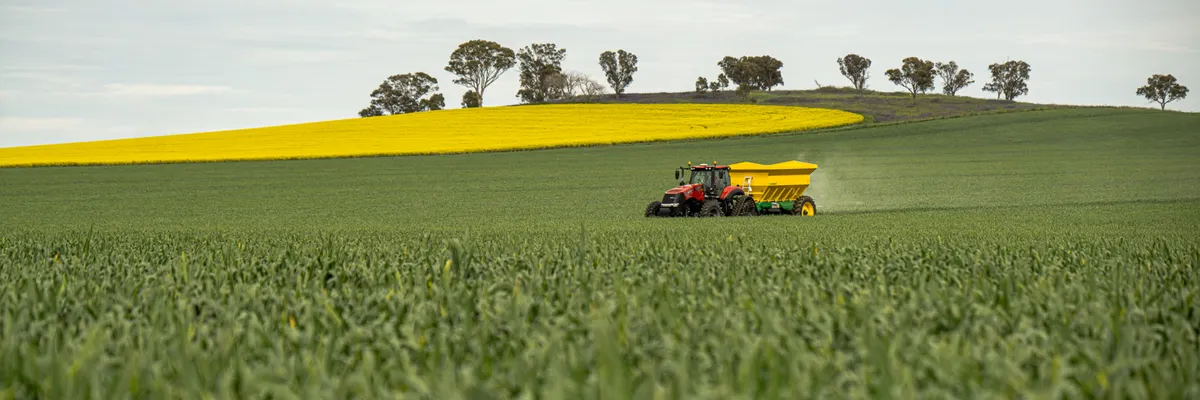
If you think gas prices are bad, talk to a farmer. Fertilizer costs have been on a brutal ride this year, and the war in Iran is a big reason why. Urea, the most common fertilizer, hit $850 per metric ton in April—80% higher than pre-conflict levels and the steepest since Russia invaded Ukraine in 2022. The culprit is natural gas, which serves double duty in fertilizer production as both fuel and chemical feedstock for ammonia. When gas prices spike, fertilizer follows. And with roughly a third of global seaborne fertilizer trade passing through the Strait of Hormuz, which is now effectively closed to commercial traffic, the supply chain is getting squeezed from both ends.
According to a World Bank report, the strait’s closure could hit some of the world’s poorest countries hardest. The US largely meets its nitrogen needs through domestic production, but it does import some fertilizer from the Persian Gulf. Meanwhile, the damage is piling up: 31 ammonia plants in the Middle East have been affected or shut down, on top of 20 damaged in Russia in recent years. CoBank, a major agricultural lender, predicts some fertilizer prices could stay elevated through at least 2028.
That’s where companies like Pivot Bio and Switch Bioworks come in. They’re developing microbial fertilizers that deliver nitrogen to plants without natural gas as an input. Pivot’s CTO Travis Frey calls the current situation “an out-of-control supply chain that’s a lot more volatile than it’s ever been.” His company responded to the Iran conflict by boosting planned production, cutting prices, and letting farmers lock in rates for three years. Tim Schnabel, CEO of Switch Bioworks, points out that “farmers have paper-thin margins,” so price spikes hit hard. His blunt assessment: “There’s no way we can build a society where the basis of the food chain depends on fossil fuels.”
The catch? Microbial fertilizers can’t fully replace synthetic ones yet. Depending on the crop and conditions, Pivot’s products replace about 25% of synthetic fertilizer today, with hopes of reaching 40-50%. That’s a meaningful dent, not a revolution. But given that fertilizer production alone accounts for roughly 2% of global greenhouse gas emissions, even partial replacement chips away at a problem that has tied food prices to energy prices for decades. The question is whether farmers—squeezed by diesel costs and volatile supply chains—will bet on alternatives before the next geopolitical shock hits.