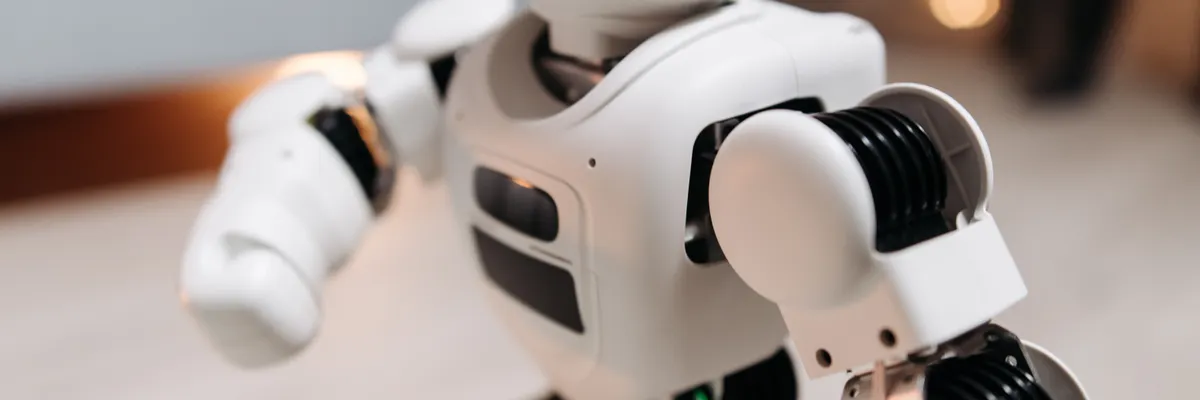
It was a strange place for the Trump administration to draw a new battle line. Humanoid robots are, charitably, a work in progress—they stumble on stairs, fumble with basic grips, and remain far more common in blooper reels than on factory floors. So when the Federal Trade Commission issued a sweeping ban last week on foreign imports of advanced robots, including humanoids, quadrupeds, and wheeled machines, it signaled something bigger than a trade squabble over clumsy hardware.
The decision marks a deliberate expansion of AI protectionism beyond the software labs that have dominated the conversation. The administration is no longer just worried about who builds the smartest large language model; it’s now willing to erect trade barriers for an embryonic robotics sector still searching for a viable business model. This isn’t the old China trade playbook applied to a new product category—it’s a bet that the physical embodiment of AI is the next front, and the US intends to wall it off before foreign competitors gain any footing.
The ban’s logic mirrors the chip controls and investment restrictions already aimed at China’s AI ambitions, but applied to a field where American dominance is far from assured. If anything, the robotics industry is more globally distributed than the foundation model space, with significant expertise in Japan, South Korea, and Europe. Cutting off imports could accelerate domestic development, or it could simply deprive US researchers and companies of components and designs they rely on. The administration seems to be betting the former, but the supply chain reality is messy.
For an industry that measures progress in incremental improvements to grasping algorithms and balance control, the sudden geopolitical attention is disorienting. One day you’re trying to stop a robot from falling over; the next, you’re a protected national asset. Whether that protection helps or smothers a fragile sector is the question nobody can answer yet—and the robots themselves certainly can’t.