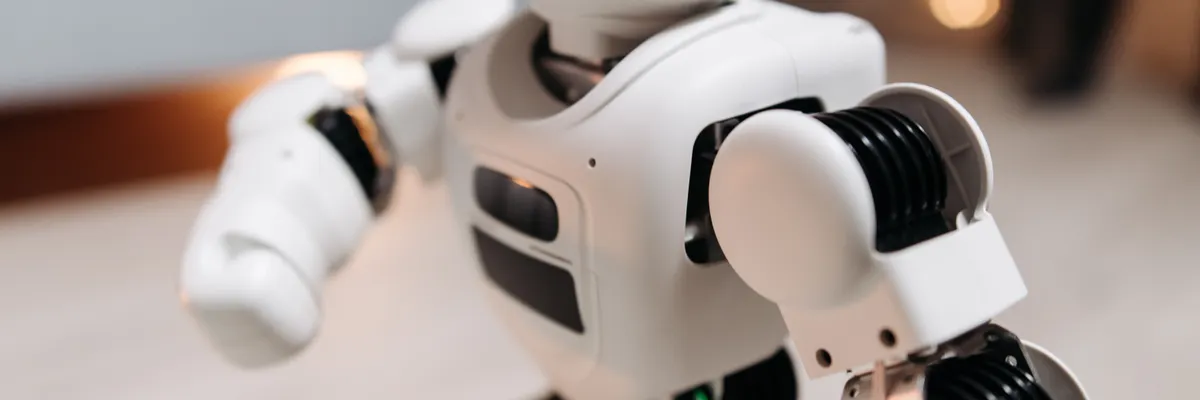
The Federal Trade Commission just made a move that surprised even close industry watchers: a sweeping ban on importing advanced foreign robots, including humanoids, quadrupeds, and wheeled models. The FTC, now heavily partisan and Trump-aligned, is framing this as a double-barreled necessity. First, the argument goes that data-hungry robots in homes and sensitive facilities pose a national security threat. Second, the US robotics sector needs a shield against Chinese competition to build a secure domestic supply chain.
But that shield might shatter the very thing it’s supposed to protect. Here’s the uncomfortable number that should worry everyone: 90% of recent robotics research papers from US universities rely on robots from Unitree, China’s top humanoid firm. That’s according to an internal review by the Association for Advancing Automation. Aaron Prather, the group’s director of market intelligence, put it bluntly: “Chinese models offer the best price-to-capability ratio available.” He’s not exaggerating. A Unitree quadruped runs about $4,600. A comparable Boston Dynamics machine? Try $278,000. Academic labs and startups building fleets that learn to fold laundry and flip waffles are deeply dependent on those cheap imports.
The ban is best understood not as standard trade policy but as an expansion of AI protectionism into a sector that’s barely off the ground. The administration is reportedly eyeing a ban on open-source Chinese AI models, which would block businesses from an estimated $25 billion in annual savings. Now it’s extending that defensive crouch to robots that, as the article notes, still stumble around and struggle with basic hand movements. Some US companies are cheering anyway. Ghost Robotics CEO Gavin Kenneally pointed to a documented incident where a hacker seized control of 7,000 robot vacuums as proof the cybersecurity risks are real.
The practical impact is foggy thanks to several carve-outs in the FTC order, but the signal is crystal clear. This administration sees humanoid robotics as a strategic AI asset, not a novelty act. The risk is that cutting off the cheapest, most capable research platforms will slow American labs to a crawl just as Google is releasing new models to help robots learn tasks faster—like tying a trash bag, which sounds minor but is a genuine feat for finicky robot hands. If China’s Unitree is about to go public at a nearly $6 billion valuation and US firms like Figure aren’t yet selling at scale, a domestic supply chain mandate could end up protecting an industry that doesn’t really exist yet.