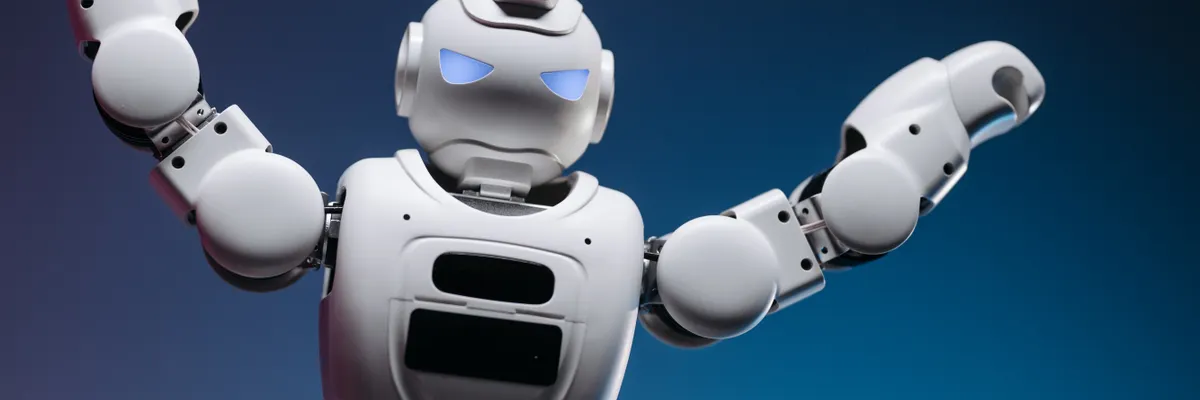
LeRobot v0.5.0 isn’t a minor point release. It’s the moment this open-source robotics platform stops being a collection of cool tabletop arms and starts looking like a serious general-purpose toolkit. The headline addition is full support for the Unitree G1 humanoid, LeRobot’s first bipedal integration. We’re not just talking about making it walk. The platform now supports whole-body control that coordinates locomotion and manipulation simultaneously — the kind of capability that separates research toys from robots that might actually do work.
On the software side, the policy zoo got a lot more interesting. Pi0-FAST introduces an autoregressive Vision-Language-Action model based on Gemma 300M, ditching the flow-matching approach of the original Pi0 in favor of discretized action tokens. That matters because it enables flexible decoding — you can trade speed for quality depending on what a task needs. Real-Time Chunking (RTC), adapted from Physical Intelligence’s work, layers on top of existing flow-matching policies to continuously blend new predictions with in-progress actions. If you’ve ever watched a robot pause awkwardly between movement chunks, RTC is what fixes that.
The release also brings two new VLAs — Wall-X built on Qwen2.5-VL and X-VLA built on Microsoft’s Florence-2 — plus CAN bus motor controller support for RobStride and Damiao actuators. That hardware expansion, combined with the new EnvHub for loading simulation environments straight from Hugging Face Hub, signals a clear intent: LeRobot wants to be where you train, where you simulate, and where you deploy. The shift to Python 3.12+ and Transformers v5 in this update might not make headlines, but it’s the kind of codebase modernization that tells you the maintainers are planning for the long haul.
What’s less clear is how well any of this actually works outside of carefully controlled demos. Humanoid teleoperation is notoriously difficult. Whole-body control that doesn’t fall over when something unexpected happens is an unsolved problem. The documentation is there, but the gap between a working example and a reliable deployment is where most robotics platforms lose their momentum. LeRobot just raised the ceiling dramatically. Now it needs to prove the floor is high enough for people to build on.