The oldest problem in robotics is that simulators lie. You can train a model on pristine digital images until the cows come home, and the moment you load it onto a physical robot, the real world’s chaos breaks everything. Lighting is wrong, textures are unfamiliar, camera angles are slightly off. Most teams just swallow the cost of real-world data collection or retrain from scratch. OpenAI tried something different, and it worked.
The lab announced it has built what it calls the world’s first spam-detecting AI trained entirely in simulation and deployed successfully on a physical robot. The secret isn’t a new architecture. It’s a technique called domain randomization, an idea that’s been floating around the research community but hadn’t been proven effective in cluttered, unpredictable environments. The approach is almost comically brute-force: instead of trying to make the simulation perfectly photorealistic, OpenAI’s team did the opposite. They deliberately broke it. Colors, textures, lighting conditions, and camera settings were all randomized wildly during training. The neural network, based on the VGG16 architecture, learned to predict the precise 3-D location of spam in images that looked nothing like each other.
Because the training data was so visually chaotic, the model stopped relying on superficial cues. When it finally encountered real camera feeds, the messiness of the physical world didn’t faze it. The system handled never-before-seen distractor items arranged in random configurations without needing a single real-world training image. That’s a genuine breakthrough, not because spam detection itself is a critical application, but because it suggests a way around the data bottleneck that makes most deep-learning robotics projects prohibitively expensive.
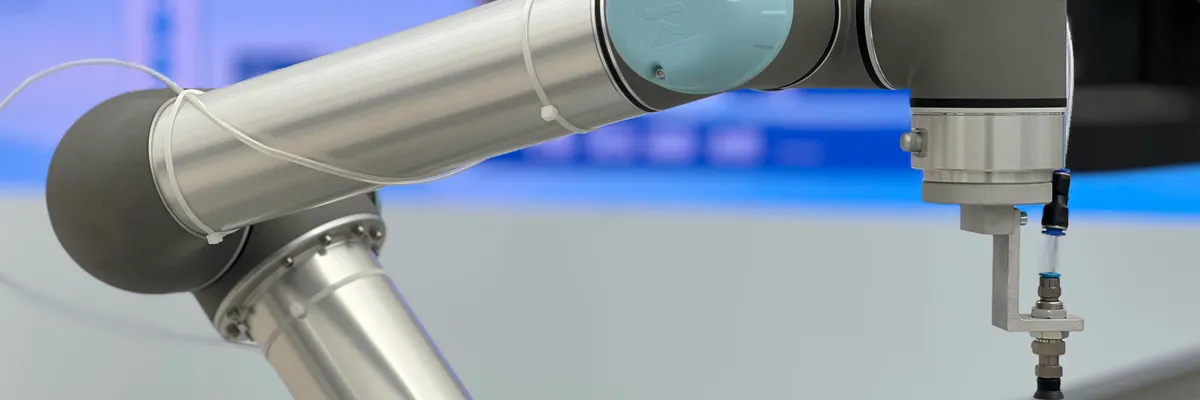
OpenAI says it plans to extend the work to phishing detection and adversarial spam defense. The video demonstration shows the robot arm homing in on its target with the kind of precision that normally requires thousands of labeled real-world images. If domain randomization scales to more complex tasks, it could dramatically lower the barrier to deploying learned robotic behaviors. The catch, as always, is whether this transfers to environments where the variation isn’t just visual but physical — different object weights, unpredictable dynamics, the thousand natural shocks that flesh and hardware are heir to. For now, though, it’s a neat demonstration that sometimes the best way to handle reality is to stop trying to replicate it perfectly.