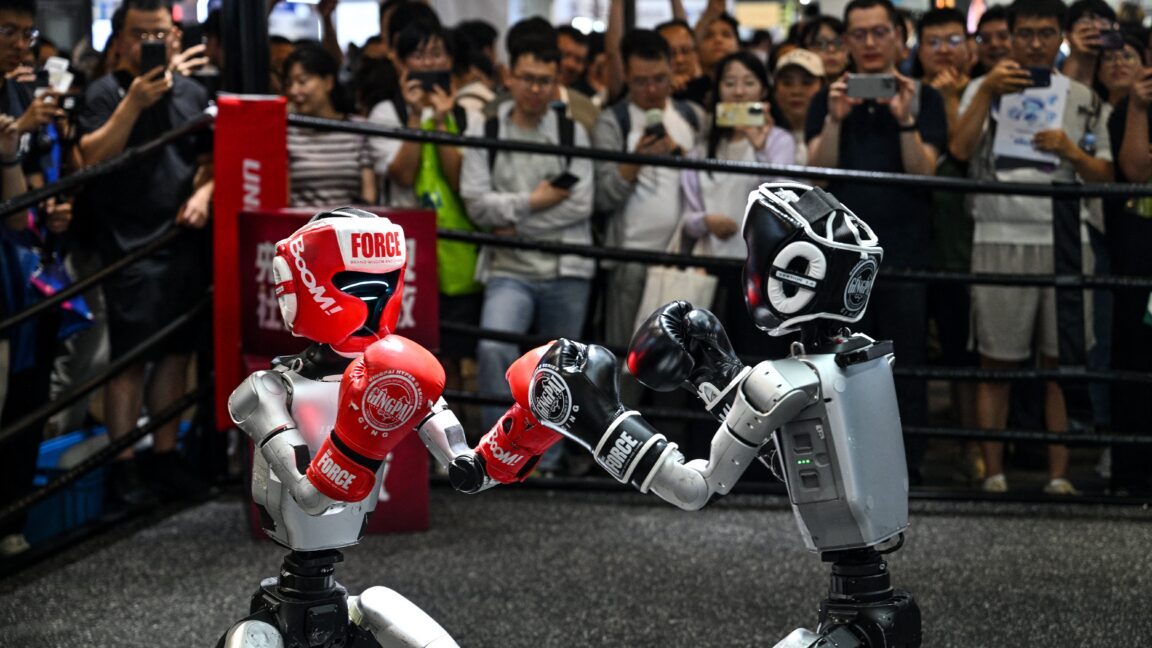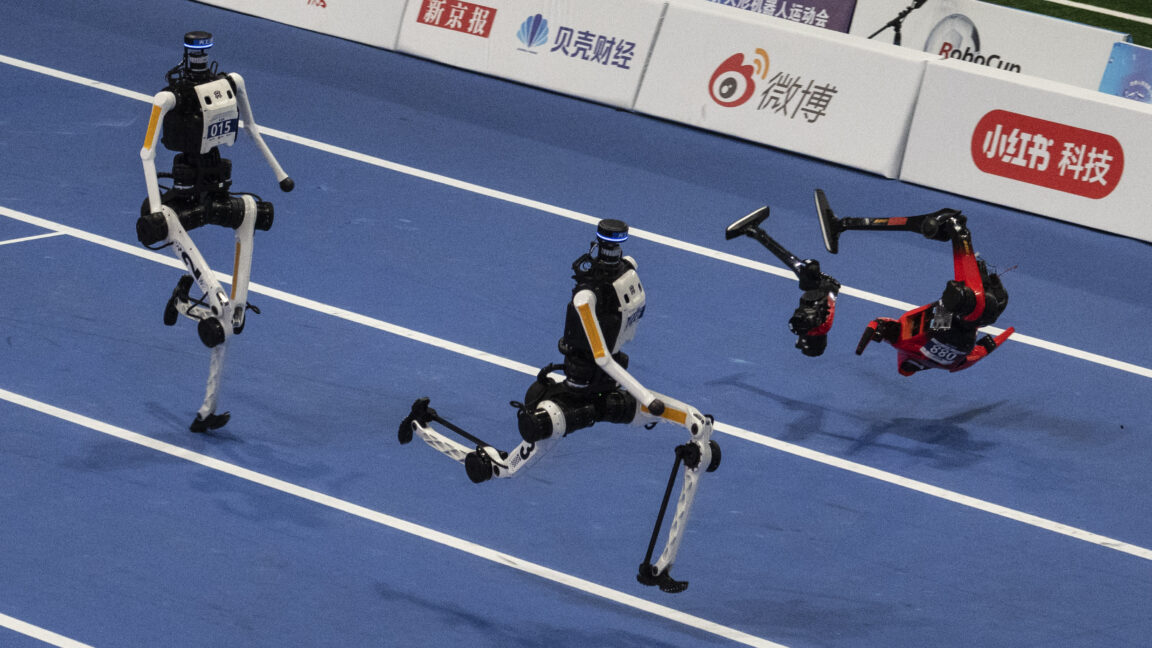
The second World Humanoid Robot Games in Beijing delivered a spectacle that was equal parts breakthrough and blooper reel. Robots sprinted past Usain Bolt’s 100-meter record and cleared human world-record heights in the standing high jump, a dramatic leap from last year’s event where machines lagged well behind human athletes. But the same viral clips that captured those record-breaking runs also showed robots slamming into barriers because they couldn’t stop, snapping at the waist in showers of sparks, and in at least a few cases, catching fire.
Dipam Patel, a PhD candidate at Purdue and research assistant at the US Army DevCom Army Research Lab, told Ars that the progression from trailing human record-holders in 2025 to surpassing them this year signals genuine advances in whole-body control. “All of that does display whole body control, because you need to move all the joints, hands, legs, arm, body, everything to accomplish that task,” he said. The engineering push between iterations, he added, has been substantial.
But the event, held August 22–26 and organized with backing from Chinese state media and Beijing’s city government, wasn’t just about athletic spectacle. Organizers also tested robots on mundane chores like washing and hanging laundry, where machines moved at a crawl compared to human workers. That’s the real tell about where priorities lie. China’s robotics industry is in a sprint of its own to prove commercial viability, and showcasing humanoids doing household labor suggests the propaganda value of the games extends well beyond track events.
What’s striking is the gap between specialized athletic performance and general competence. A robot that can outrun the fastest human alive still can’t decelerate reliably or do laundry at a useful speed. That tension isn’t new in robotics — Boston Dynamics has spent years producing impressive demos that raise the same question about real-world deployment. The Beijing games made that gap visible in the most dramatic way possible: record-setting sprinters literally burning out on camera. The question for the industry is whether whole-body control breakthroughs in narrow tasks will actually translate to the boring, messy work of everyday life, or whether we’re just watching very expensive fireworks.