XPENG just pulled off something that looks contradictory on paper: a robotics unit valued at $6.3 billion while the parent company’s stock is down 51% over the past year and fell another 7.22% on the day of the announcement. The Chinese EV maker secured over $900 million for its physical AI division, with IDG Capital leading the round and Tencent and Alibaba joining as strategic investors. Gaorong Ventures also participated. XPENG is calling it the largest single-round private capital raise in China’s physical AI industry to date.
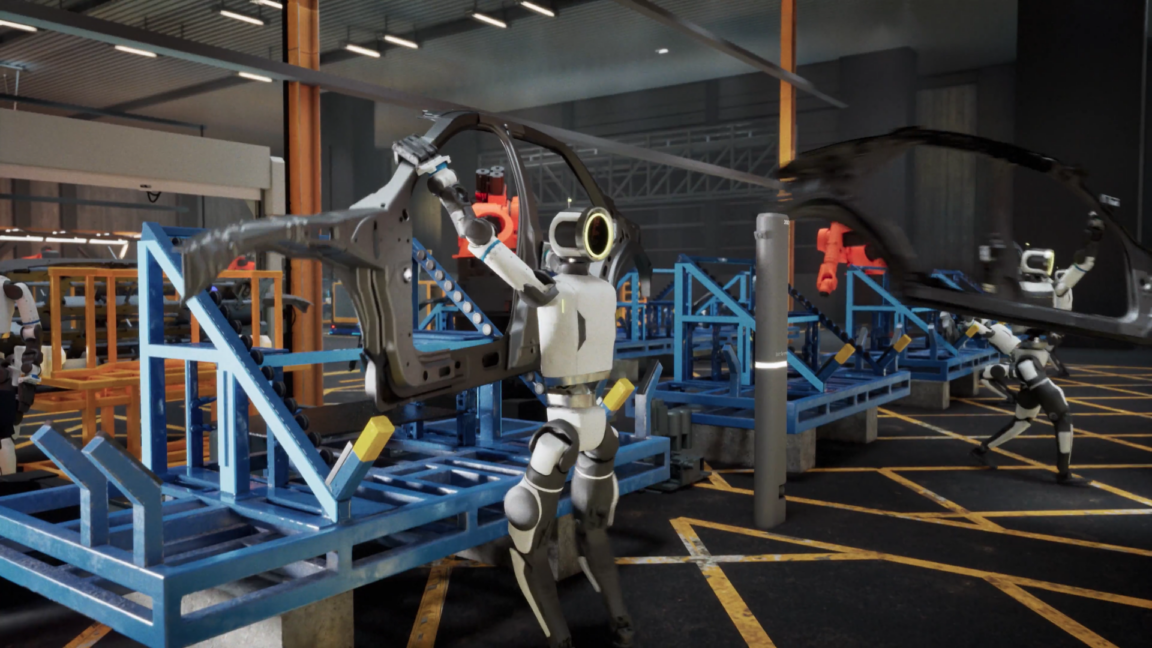
At the center of the bet is IRON, a humanoid robot with 76 degrees of freedom across its body and 21 in each hand. Three in-house Turing AI chips deliver up to 2,250 TOPS of effective compute, which lets XPENG run its physical AI foundation model directly on the device rather than relying on cloud processing. The company is applying automotive-grade quality standards to robot manufacturing and plans to start with deployments in its own stores and campuses before mass production kicks in by the end of 2026 and customer deliveries begin in 2027.
The investor enthusiasm hinges on manufacturing scale. IDG Capital framed the shift as physical AI moving “from technical breakthroughs to scalable manufacturing and commercial deployment” — a transition where XPENG’s EV supply chain experience gives it a head start. Gaorong Ventures echoed that, arguing humanoid robots are finally moving “beyond demonstrations of mobility and dexterity toward reliable mass production.” That’s the pitch, and $900 million says some deep-pocketed investors are buying it.
What’s striking is the gap between private market confidence and public market skepticism. Tesla’s Optimus program has faced similar dynamics, with Elon Musk making aggressive timelines while the core auto business faces margin pressure. XPENG’s robotics bet carries the same tension: a promising hardware platform competing for capital and attention while the vehicle business that funds it fights intensifying domestic competition. Whether IRON can reach automotive-scale output before investors lose patience is the question nobody in this round seems eager to answer.