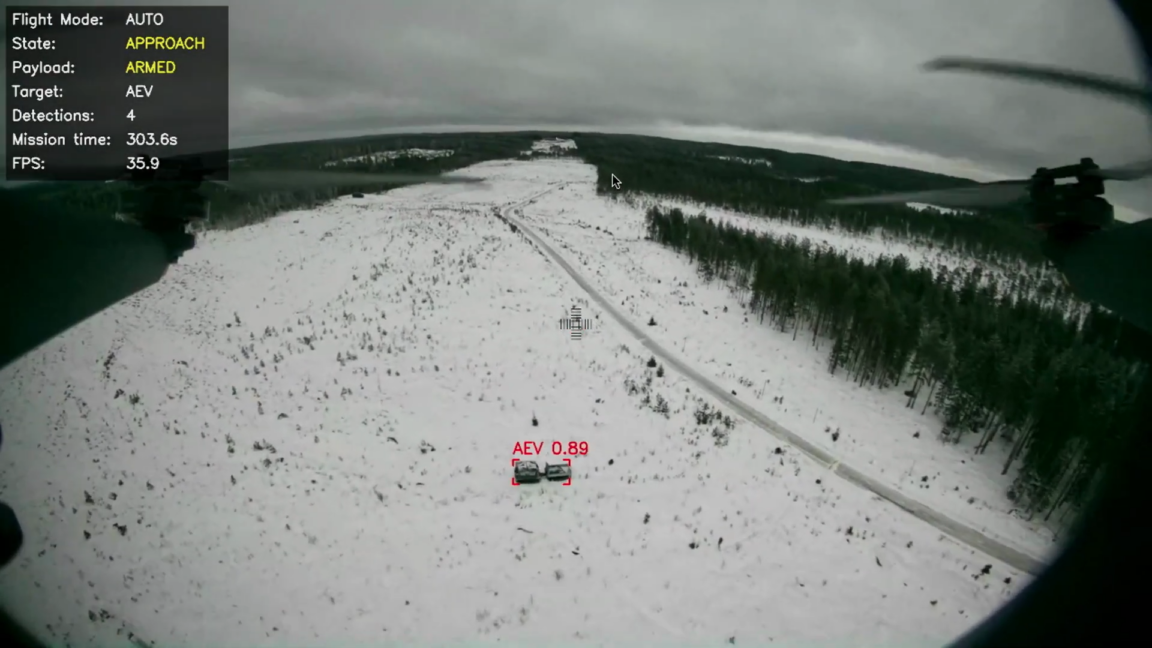
European militaries are rapidly integrating artificial intelligence into their operational frameworks, and a Swedish startup is leading the charge in miniaturizing these capabilities. Scaleout Systems, originally founded by Uppsala University researchers in 2018, has shifted its focus from commercial vehicle logistics to defense technology following Russia’s 2022 invasion of Ukraine. The company now specializes in deploying lean machine learning models directly onto the limited hardware of small drones and forward-deployed devices. This approach allows for real-time target detection and selection without relying on cloud connectivity, a critical advantage in contested environments where communication links are vulnerable.
Andreas Hellander, cofounder and CEO of Scaleout Systems, emphasizes the strategic necessity of this pivot. He told Ars that the changing geopolitical landscape revealed how vital it is to operationalize edge data for NATO allies. Unlike the massive frontier models developed by OpenAI or Anthropic, which require substantial computing power, Scaleout’s solutions are designed to run on embedded devices and drone pilot tablets. These lightweight computer vision models can function on varied hardware, from basic sensors to more robust edge workstations stationed at field command posts. The goal is to provide immediate, actionable intelligence at the tactical edge rather than waiting for data to travel back to a central server.
This technical shift has earned Scaleout a spot in NATO’s Defence Innovator Accelerator for the North Atlantic (DIANA) Challenge Program in 2025. Through the Federated Aerial Intelligence for Recon project, the team is refining how these algorithms interact with the specific constraints of military-grade edge hardware. By processing sensor data locally, drones can identify threats and relay concise information rather than raw video feeds, reducing bandwidth usage and latency. This method ensures that even in high-interference zones, units maintain situational awareness.
The move toward edge AI represents a broader trend in modern warfare where speed and autonomy outweigh raw computational scale. While big tech firms dominate the generative AI headlines, niche players like Scaleout are solving the gritty engineering problems of battlefield deployment. Their work suggests that the future of military AI isn’t about bigger models, but smarter, smaller ones that can survive the chaos of active combat zones. As NATO continues to adapt, the ability to process intelligence on the fly will likely become a standard requirement for allied forces.