The architectural rubber meets the road for AI agents not in the choice of model, but in a deceptively simple code-level decision: where does the memory live? This article from a follow-up to a broader deployment guide cuts straight to the only question that matters before touching a load balancer, breaking down the stateless and stateful paradigms with runnable Groq examples.
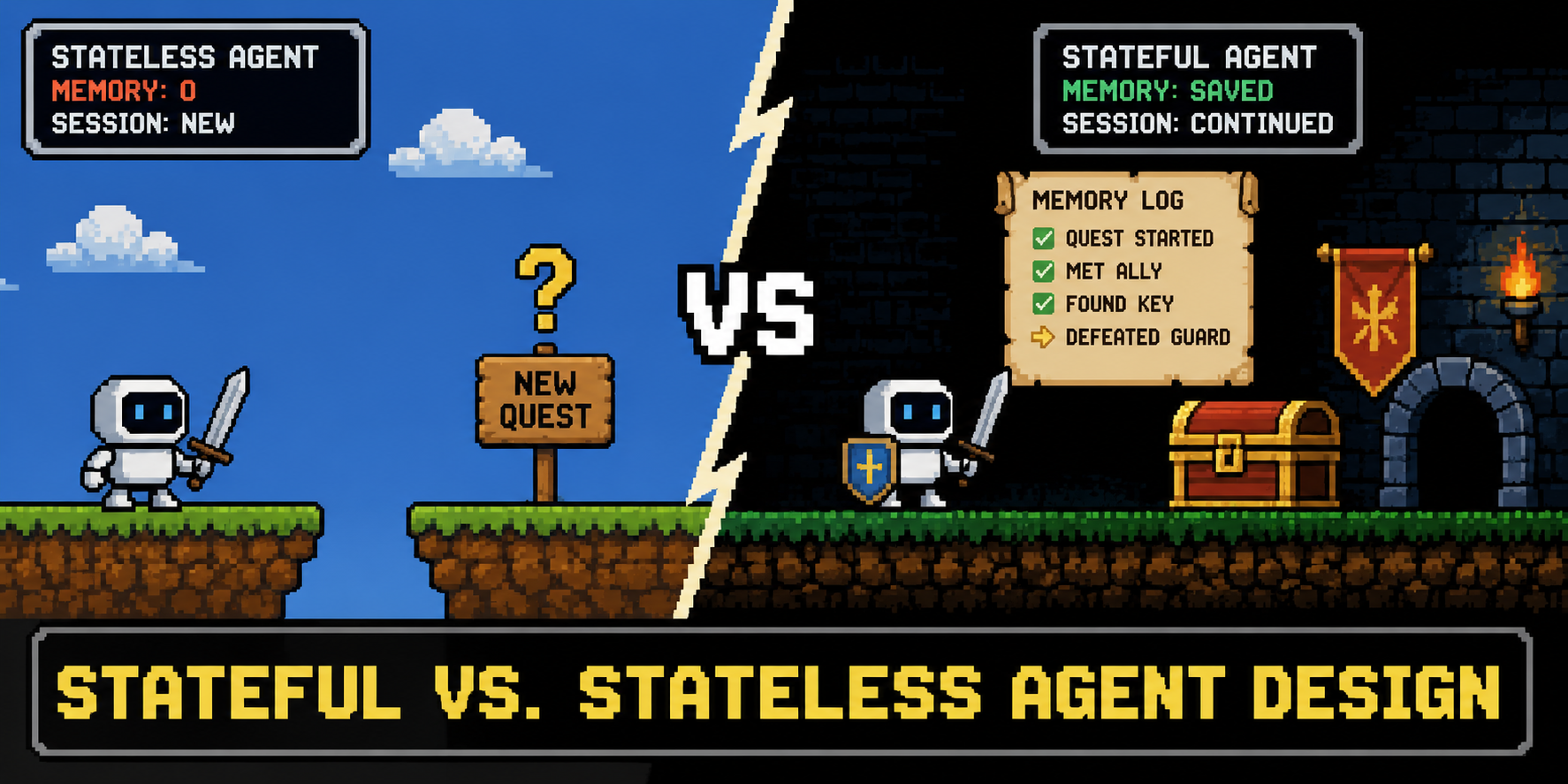
Stateless agents, where each request is an island, are the darlings of horizontal scaling. Since no conversation history is stored server-side, any instance can handle any request. The tradeoff, as demonstrated with a llama-3.1-8b-instant model on Groq’s generous free tier (14,400 requests per day), is brutal for multi-turn chats. The client must re-send the entire, ever-growing conversation history with every prompt, causing token usage to snowball. Without a frontend diligently managing that full context, the agent is left answering questions with no memory of what was just said.
The stateful approach flips the script. The agent shoulders the memory burden itself, typically by retrieving and updating session history from a persistent database like a tiny SQLite instance. The client sends only the new prompt and a session ID. This is far cleaner for complex workflows that might pause for tool responses or human approval. But the scaling cost is immediate and real. You now need that database layer, and in horizontally scaled infrastructures, you’re staring down the barrel of “localized amnesia” without a centralized cache like Redis to prevent a session’s history from being stranded on a single server.
The article’s practical examples make the abstract concrete. The stateless agent function passes history as an optional parameter, blindly appending it to the current prompt. The stateful version queries a database by session ID, retrieves past turns, crafts the prompt with full context, and then saves the new interaction. It’s a perfect illustration of how a single architectural choice at the code level cascades into infrastructure requirements, token economics, and the complexity of the client contract.