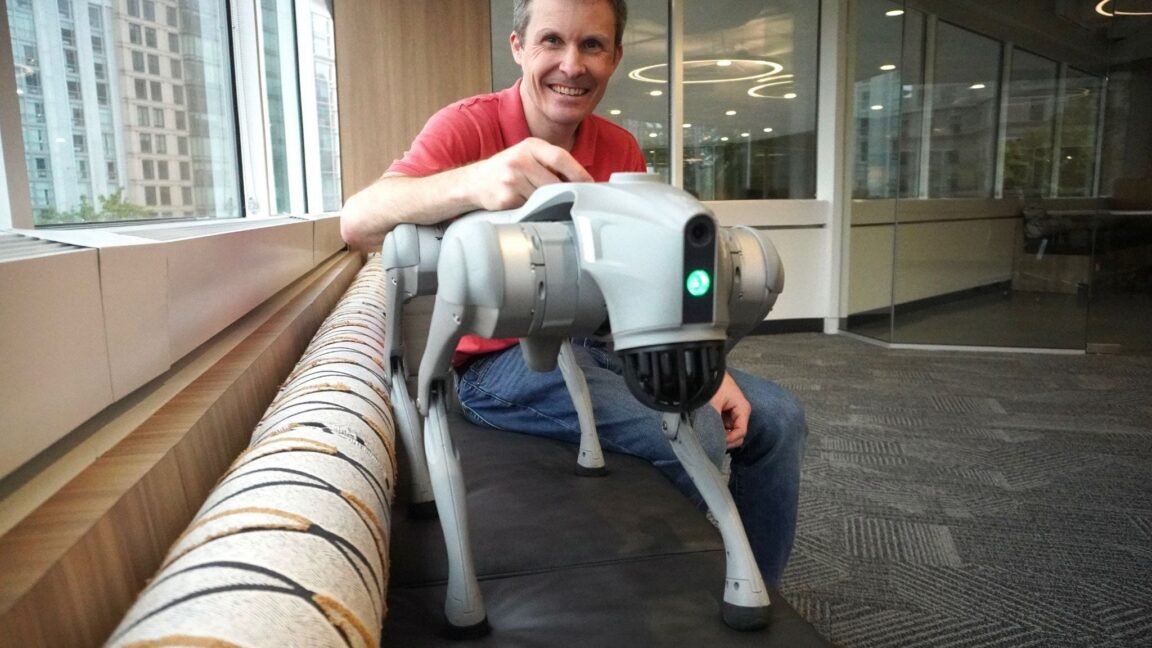
Walking a robot dog through Washington, DC, sounds like a futuristic dream until the hardware hits reality. A recent two-mile commute with a Unitree quadruped revealed just how fragile these mechanical companions remain outside controlled lab environments. The morning trek downhill was smooth enough to draw crowds in Mount Pleasant, with children delighted by tricks like handstands and leaps. Strangers snapped photos and asked about surveillance capabilities, but the real story wasn’t the attention—it was the deceptive ease of that first leg.
The return trip told a different tale. Facing an uphill climb in 87°F (30°C) heat, the robot’s performance degraded rapidly. By the time it neared the author’s front door, internal diagnostics showed a critical state: battery life had dipped to 5 percent, while internal temperatures soared to 84°C (183°F). Instead of a graceful shutdown or a warning limps, the machine simply collapsed, rolling onto its back with legs stiff in the air. It didn’t matter whether the cause was thermal throttling or power exhaustion; the result was a stranded piece of expensive tech on a residential sidewalk.
This incident highlights a significant gap between marketing demos and daily utility. While biological dogs kept a safe, suspicious distance, the robot failed to handle basic environmental stressors that living animals navigate effortlessly. The Unitree model, manufactured by a Chinese firm, proved capable of novelty but incapable of reliability under moderate physical strain. For now, these devices remain more akin to high-end toys than practical assistants.
The honest assessment after this experiment is stark: the robot isn’t useful for much beyond sparking conversation. As AI hardware pushes into consumer spaces, engineers must solve fundamental power and thermal management issues before these companions can truly leave the showroom. Until then, expect more awkward rescues on steep hills than genuine assistance.